
Best Plants for Your Riparium
Recreate the riverbank. These plants grow with their roots submerged but their heads held high, creating a stunning natural wall for your aquarium.
🌱 The Riparium Starter Pack
Start here to create that lush "emerged" look. These plants are robust enough to handle having "wet feet" 24/7.
- Pothos: The classic trailing vine, grown in a planter.
- Peace Lily: Elegant foliage that filters water beautifully.
- Lucky Bamboo: Adds architectural height and structure.
- Anubias: The reliable aquatic anchor for the bottom.
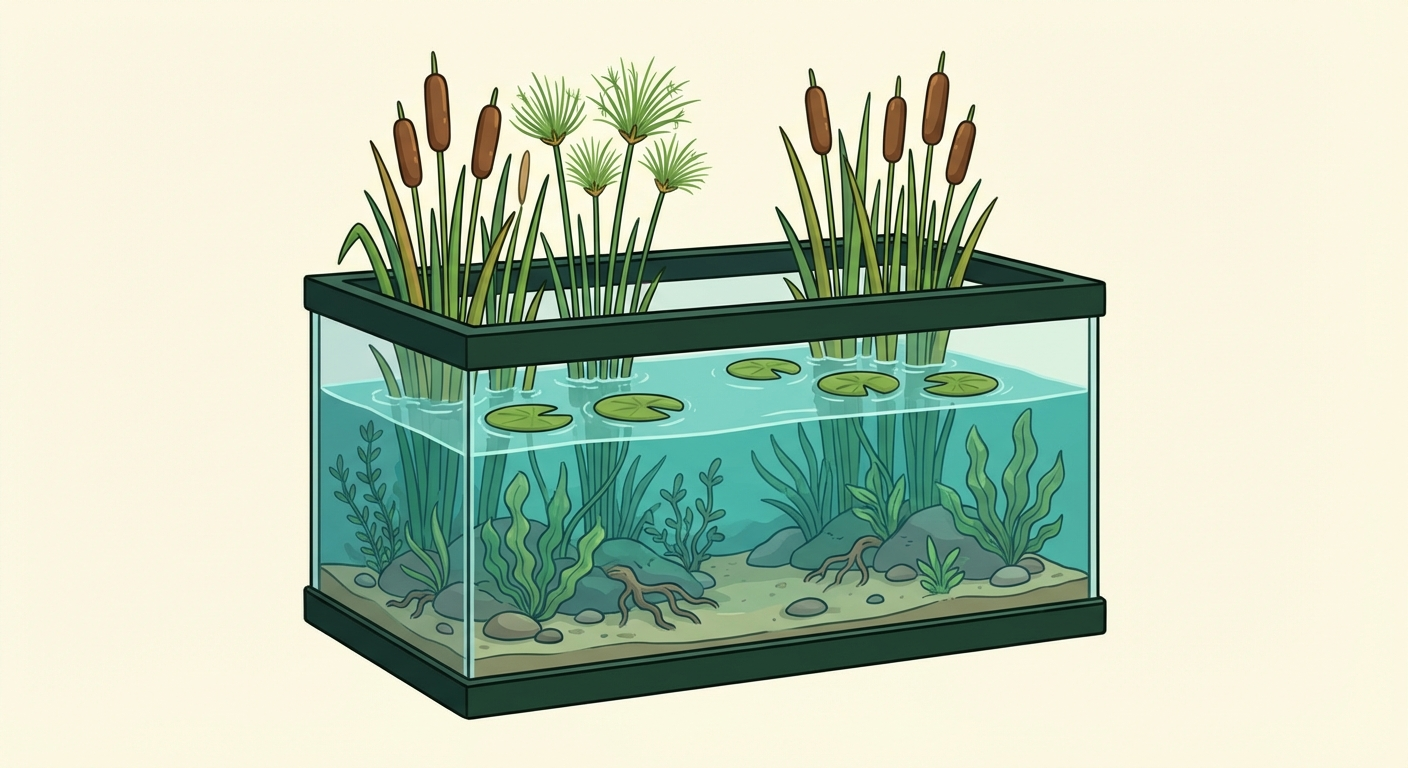
Planting Zones
Planter / Rafters
Attached to the rear glass wall. These plants have roots in water but leaves in air.
Midground
Smaller planters or floating rafts that add density and hide equipment.
Submerged
Rooted in the substrate at the bottom, providing the underwater forest look.
🟢 Beginner Plants
The easiest way to get that "jungle" look. These plants adapt readily to having their roots underwater.

Pothos Epipremnum aureum
The undisputed riparium champion. Take a cutting, stick the stem in a riparium planter with some LECA or gravel, and let the roots dangle into the water. It grows explosively, creating a curtain of green that hangs down the back of the tank. It's a nitrate sponge, keeping your water crystal clear for fish.

Peace Lily Spathiphyllum
Peace Lilies are surprisingly adaptable to riparium life. Their lush, dark green leaves contrast beautifully with the water. Use a dwarf variety so it doesn't overpower the tank. The roots are excellent at filtering the water. With enough light, you might even get the iconic white flower spathes rising above the waterline.

Lucky Bamboo Dracaena sanderiana
Despite the name, this isn't true bamboo, but it looks the part. It adds a structural, vertical element to the riparium background. It grows straight up and can be trained to curl. It's incredibly hardy and thrives with its roots fully submerged. Just ensure the stalks themselves aren't submerged, or they may rot.

Monstera Adansonii Monstera adansonii
Also called "Swiss Cheese Vine" for its holey leaves. This looks incredible trailing down from a high planter. It grows very fast in the high-humidity environment over water. The aerial roots will dive deep into the tank, creating a wild, natural aesthetic. It's lighter and airier than Pothos.
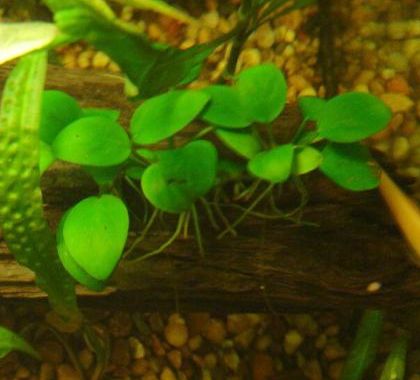
Anubias Anubias spp.
While often grown fully submerged, Anubias also grows well emersed (out of water) in a riparium. It's perfect for attaching to driftwood that sticks out of the water. Its thick leaves are very durable and provide a great transition between the underwater world and the emersed planters.

Salvinia Salvinia minima
A small floating fern that helps shade the water surface and reduce algae. It has tiny "hairs" on the leaves that make them water-repellent. It provides great cover for shy fish. It reproduces rapidly, so you'll need to skim some off regularly, but it's easy to remove.

Frogbit Limnobium laevigatum
Looking like miniature lily pads, Frogbit adds a very aesthetic touch to the water surface. It sends down long, feathery roots that dangle into the water column, looking great under the trailing Pothos above. It shades the tank and provides security for fish.
🟡 Intermediate Plants
These require specific nutrients or a bit more grooming to look their best.
Domino Peace Lily Spathiphyllum 'Domino'
A variegated version of the Peace Lily with striking white splashes on the leaves. It brings a bright pop of color to the background. It is slightly slower growing than the standard green variety and requires a bit more light to maintain the variegation, but the visual payoff is worth it.
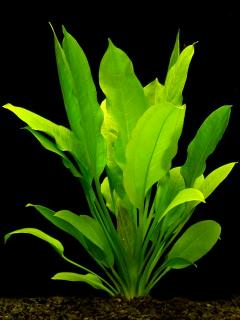
Amazon Sword Echinodorus grisebachii
While usually fully submerged, large Swords can send leaves to the surface in shallow ripariums. They are heavy root feeders, so they need a nutrient-rich substrate in the bottom of the tank. They provide a massive, broad-leaf backdrop that contrasts with the finer textures of the trailing vines.

Bolbitis Bolbitis heudelotii
Also known as African Water Fern, this has a beautiful, translucent green leaf texture. It attaches to wood or rock. It can grow quite tall, making it great for the midground or background of the water section. It prefers good water flow, so place it near a filter outlet.
🔴 Advanced Plants
For unique aesthetics that demand strict parameters.

Red Root Floater Phyllanthus fluitans
A stunning floating plant with reddish roots and leaves that can turn bright red under high light. It's smaller and more delicate than Frogbit. It is very sensitive to surface agitation; if the water splashes too much, the leaves will rot and sink. It needs high light to maintain color.
⚠️ What NOT to Plant in a Riparium
Avoid these to prevent rotting, algae explosions, and dead fish:
- Soil-rooted Terrestrials: Plants that require dry soil (like regular garden flowers) will rot if their roots are constantly submerged in aquarium water.
- Cacti & Succulents: Absolutely not. They will dissolve and foul the water chemistry rapidly.
- Large Ferns (Boston Fern): While they love humidity, they are too large and messy for a riparium planter. Their dropped fronds can decay in the water, causing ammonia spikes.
- Aggressive Invasives: Avoid any plant known to be invasive in your local waterways. Never dump riparium plants into local waterways.