Riparium Care & Maintenance Guide
Everything you need to keep your riparium thriving — from daily checks to seasonal adjustments.
Maintenance Schedule
📅 Daily (2-3 minutes)
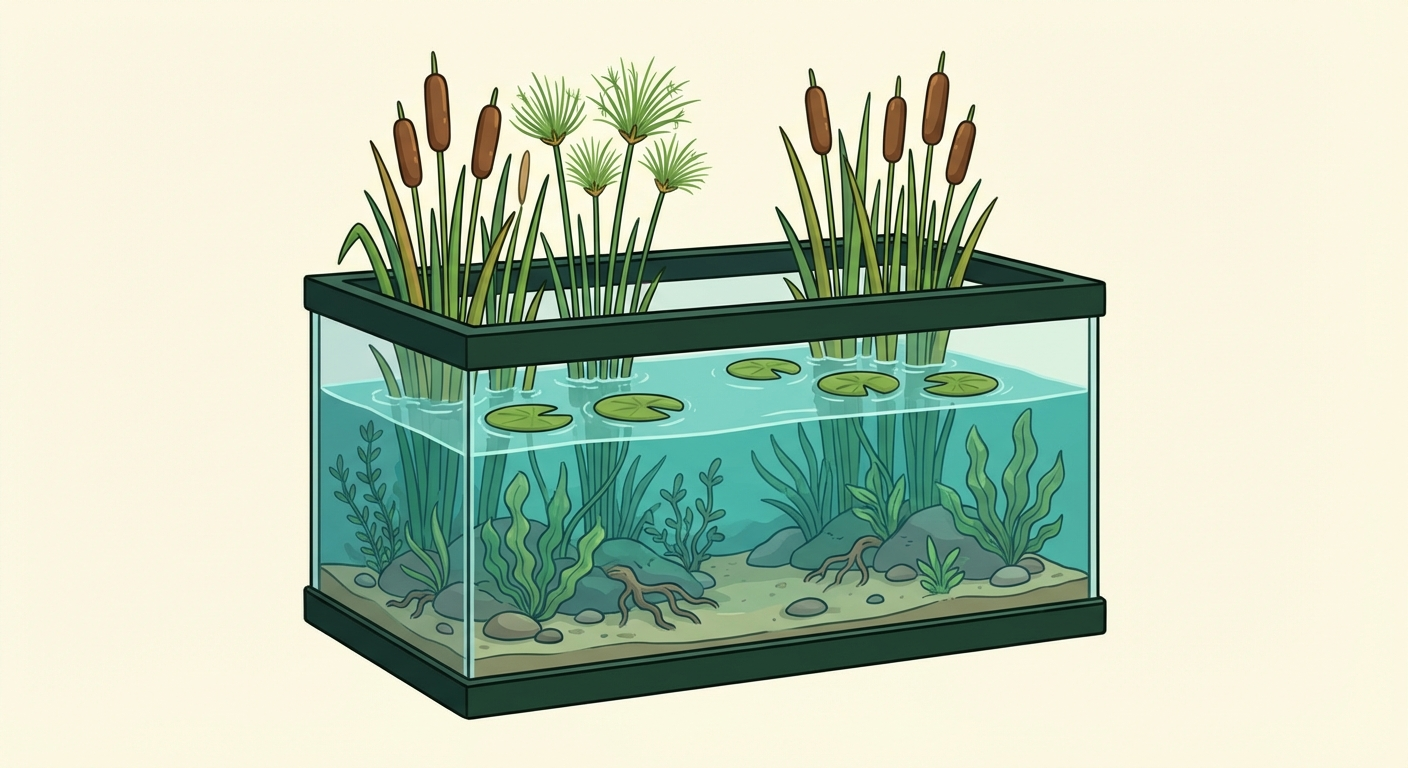
- Water Level: Ripariums are open-top and evaporate fast. Top off daily to keep planters submerged.
- Livestock Check: Count your fish/shrimp. Check for erratic swimming or clamped fins.
- Filter: Verify the filter is running and flowing properly.
- Emergent Plants: Check leaves above the waterline for wilting or drying out.
📅 Weekly (20-30 minutes)
- Water Change: 15-20% water change. Use a gravel vacuum to remove debris from the substrate.
- Test Parameters: Ammonia, Nitrite, Nitrate, pH. Stable parameters are key.
- Glass Cleaning: Use an algae scraper or magnet cleaner for the inside glass.
- Pruning: Trim yellow/dying leaves on emergent plants (Pothos, Peace Lily).
- Planter Check: Ensure planters haven't shifted as roots grow heavier.
📅 Monthly (30-45 minutes)
- Filter Maintenance: Rinse biomedia in OLD tank water (never tap water) to preserve bacteria.
- LECA Check: Inspect the clay pebbles in planters. Rinse if heavy mineral buildup (white crust).
- Root Pruning: If roots are choking the tank, trim them back. Ensure roots aren't blocking the filter intake.
- Waterline: Clean mineral deposits at the waterline with vinegar (keep vinegar out of the water).
📅 Seasonal / Quarterly
- Winter: Shorter days mean slower plant growth. Reduce liquid fertilizer dosage. Check water temp—tropical fish need heaters (74-78°F).
- Summer: Algae season. Increase water changes to 30%. If water exceeds 80°F, add an airstone for oxygen.
- Replace Filter: Change mechanical cartridges (carbon/foam) every 3 months.
"Is This Normal?" Troubleshooting
"My floating plants are dying/melting"
Floating plants (like frogbit or water lettuce) hate surface current. If your filter output is too strong, they will tumble and rot.
"Plant roots are brown/slimy"
This is root rot. It usually happens when the planter is too full of water and the roots can't breathe at the crown.
"Green algae on the glass"
Totally normal. It's a sign of a healthy, lit aquarium.
"My shrimp are dying"
Shrimp are sensitive to water changes and parameters.
"Fish gasping at the surface"
This means there isn't enough dissolved oxygen in the water.
"White film on the water surface"
This is a biofilm caused by proteins or dust settling.
When to Wait vs. When to Act
A quick framework to help you make decisions without panic.
🟢 Wait & Watch
- Minor algae spots on the glass.
- New plants dropping a few leaves (transition shock).
- Shrimp hiding after a water change (stress).
- Slight cloudiness after replanting (disturbed substrate).
🔴 Act Now
- Any Ammonia or Nitrite reading above 0.
- Fish gasping at surface constantly.
- Shrimp deaths in clusters (check water params/temps).
- Foul smell coming from the tank.
Winter Care
Shorter days mean plants grow slower and need fewer nutrients. Cut your fertilizer dosing in half. If the room gets cold, use a thermostat-controlled heater to keep water stable for tropical fish.
Summer Care
Heat is the enemy. Warm water holds less oxygen, which stresses fish. If you don't have AC, consider an aquarium chiller or float ice bottles (in a bag) in the tank during heatwaves.