Best Plants for Your Vivarium
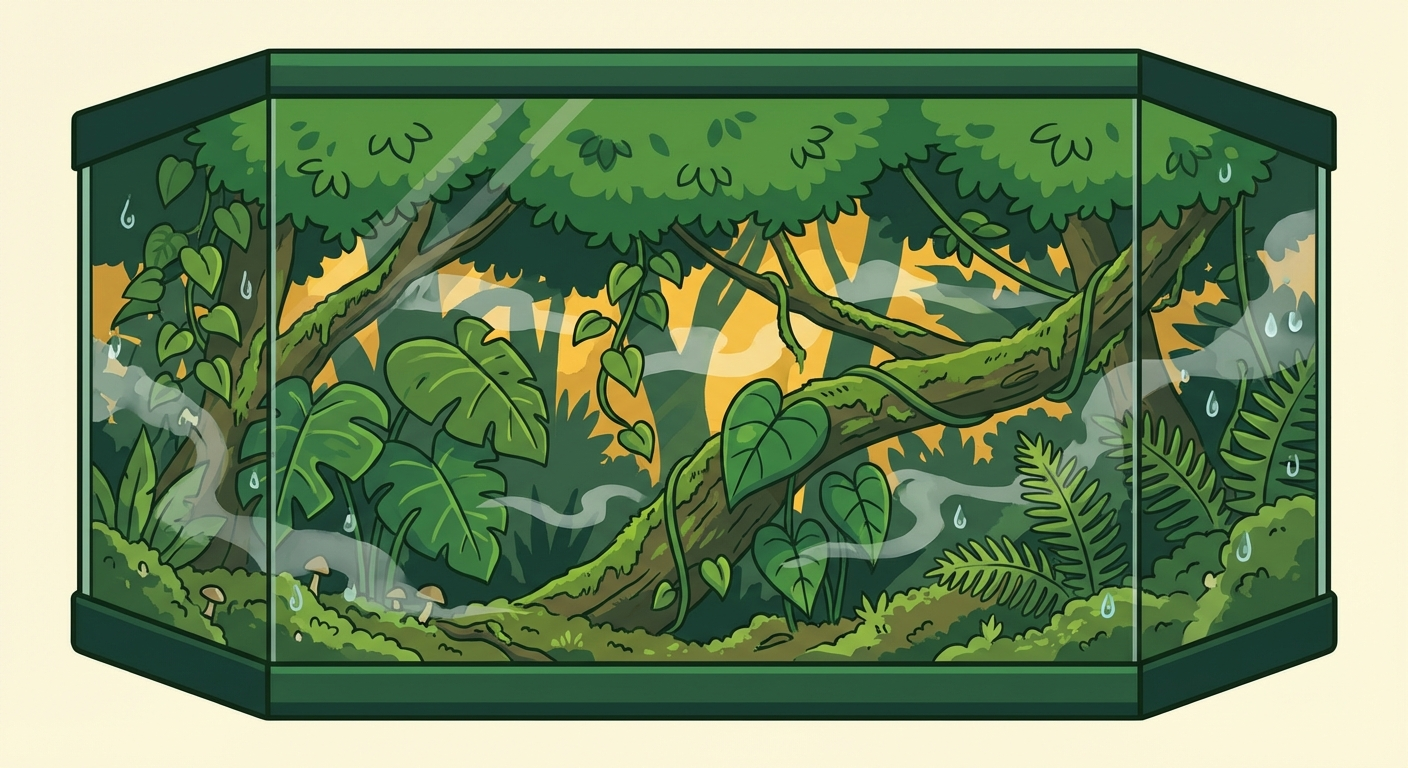
Tropical, humid, and bioactive. These plants love the moisture and are safe for inhabitants like dart frogs and geckos. Build your own jungle.
🌱 The Vivarium Starter Pack
If you're new to bioactive builds, start with these. They create the perfect canopy and ground cover for a healthy ecosystem.
- Pothos: The indestructible climber that purifies the air.
- Lemon Button Fern: Compact, fluffy ferns that love humidity.
- Neoregelia Bromeliad: Colorful water holders for your frogs.
- Sheet Moss: The essential green carpet for your floor.
Where to Place Them
Ground Cover
Mosses and creeping vines that carpet the substrate and retain moisture for your cleanup crew.
Midground
Leafy plants like ferns and peperomias that provide hiding spots and visual depth.
Background/Climbing
Vines and trailing plants that scale the background and hardscape.
Mounted/Epiphyte
Bromeliads and orchids attached to wood or cork, adding vertical dimension.
🟢 Beginner Plants
The backbone of any vivarium. These plants are robust, grow fast to fill space, and tolerate the humidity fluctuations of a new tank.

Pothos Epipremnum aureum
The absolute king of vivarium plants. Pothos is nearly impossible to kill and grows vigorously in the high-humidity environment. It's excellent for training up cork bark backgrounds or hiding equipment. Its large leaves also provide great calling perches for frogs and hiding spots for shy lizards. Just trim it regularly, or it will take over!

Lemon Button Fern Nephrolepis cordifolia
This is a dwarf variety of Boston fern, making it perfectly sized for vivariums. It features adorable, round leaflets that give it a fluffy texture. It thrives in the constant humidity and spreads via underground runners, eventually creating a nice clump. It's tougher than it looks and bounces back well if it dries out slightly.

Neoregelia Bromeliad Neoregelia spp.
No vivarium is complete without a bromeliad. Neoregelias are tank-type bromeliads that hold water in their central "cup." This is crucial for dart frogs, who use them as water sources and tadpole deposition sites. They come in stunning reds, purples, and maroons. Mount them high on cork or driftwood for the best color.

Sheet Moss Hypnum spp.
The carpet that ties everything together. Sheet moss creates that lush, jungle-floor aesthetic. It helps retain moisture in the substrate, which is vital for isopods and springtails (your cleanup crew). It prefers lower light conditions, so place it in the shade of taller plants to keep it from browning.

Creeping Fig Ficus pumila
This vine is a self-clinging marvel. It sends out aerial roots that attach to foam backgrounds, cork, and wood, creating a dense green wall. It's excellent for covering the back glass. Be warned, it grows fast and can cover other plants if not trimmed, but it's easily controlled with pruning shears.

Peperomia Peperomia spp.
Peperomias are diverse and adorable. With fleshy leaves and varied colors (watermelon, red-edge, ripple), they add visual interest. They stay small, making them perfect for the front of the tank where you don't want blocky views. They are semi-succulent, so they appreciate a bit of airflow and shouldn't be soaking wet.
🟡 Intermediate Plants
These require a bit more specific care regarding airflow or moisture, but they reward you with stunning textures.

Selaginella Selaginella spp.
Often called "Spike Moss," these aren't true mosses but prehistoric vascular plants. They look like delicate, iridescent ferns. Some varieties, like Selaginella kraussiana 'Aurea', are vibrant green. They demand constant moisture and high humidity; if they dry out, they can "crisp" quickly. Best for automated misting systems.

Rabbit's Foot Fern Davallia spp.
This fern is famous for its fuzzy rhizomes that creep over the surface of wood or rock, looking like rabbit feet. It's a fantastic epiphyte for adding texture to hardscape. It likes good airflow compared to other ferns, so don't bury it in a stagnant corner. The fuzzy roots are a great conversation piece.

Philodendron Philodendron spp.
Heartleaf Philodendrons are a classic, but smaller varieties like 'Brasil' or 'Micans' offer incredible color with their trailing vines. They climb beautifully and provide excellent cover. They are generally easy but can get leggy if light is too low. The 'Micos' variety has velvety leaves that shimmer under grow lights.

Phalaenopsis Orchid Phalaenopsis spp.
Yes, you can grow orchids in a vivarium! Mounted high on cork with a pad of sphagnum moss, they thrive in the humidity. They add a touch of elegance with their arching leaves and occasional blooms. Ensure they get airflow around their roots so they don't rot, and use a high-intensity light for flowering.
🔴 Advanced Plants
For the dedicated hobbyist. These plants have specific needs or slow growth rates that require patience.

Marcgravia Marcgravia spp.
The holy grail of vivarium plants. Marcgravia are "shinglers," meaning they grow flat against the vertical surface of the background, overlapping like shingles on a roof. This creates an incredibly natural, streamlined look. They are slow-growing and require high humidity and stable conditions to establish, but the result is breathtaking.

Jewel Orchid Ludisia discolor
Unlike most orchids grown for their flowers, Jewel Orchids are grown for their stunning foliage. Dark, velvety leaves with electric red or gold veins run along the ground. They require a terrestrial mix (not bark) and are sensitive to water quality. They add a touch of luxury to the dim forest floor.

Rex Begonia Begonia rex
Rex Begonias have some of the most colorful foliage in the plant world—swirls of silver, purple, red, and green. However, they are divas in a vivarium. They are prone to melting if conditions are too wet or too cold. They need excellent airflow and precise drainage, making them a challenge for the beginner but a prize for the expert.
⚠️ What NOT to Plant in a Vivarium
Avoid these common mistakes that can lead to rot, pests, or unhealthy environments for your animals:
- Succulents & Cacti: They will rot almost immediately in 80%+ humidity. They need dry air, which is the opposite of a vivarium.
- Lucky Bamboo (Dracaena): Often sold as aquatic, it actually needs to have its stems partially above water or in soil. Fully submerged stems rot.
- Herbs (Basil, Mint, Rosemary): These quickly outgrow the tank, become woody, and usually fall over due to lack of root space.
- Invasive Vines (English Ivy): These grow too aggressively and can choke out other plants or damage screens/vents.