
Home > Paludarium > Recommended Plants
Best Plants for Your Paludarium
The best of both worlds. These plants bridge the gap between land and water, thriving in the humid transition zone and fully submerged aquatic section.
🌱 The Paludarium Starter Pack
Start your build with these versatile champions. They handle the fluctuating moisture levels of the waterline with ease.
- Pothos: Roots in water, leaves in air. The ultimate bridge plant.
- Java Fern: The aquatic staple that attaches to wood/rock.
- Creeping Fig: Trains beautifully over the waterline edge.
- Anubias: Hardy, low-light aquatic plant for the depths.
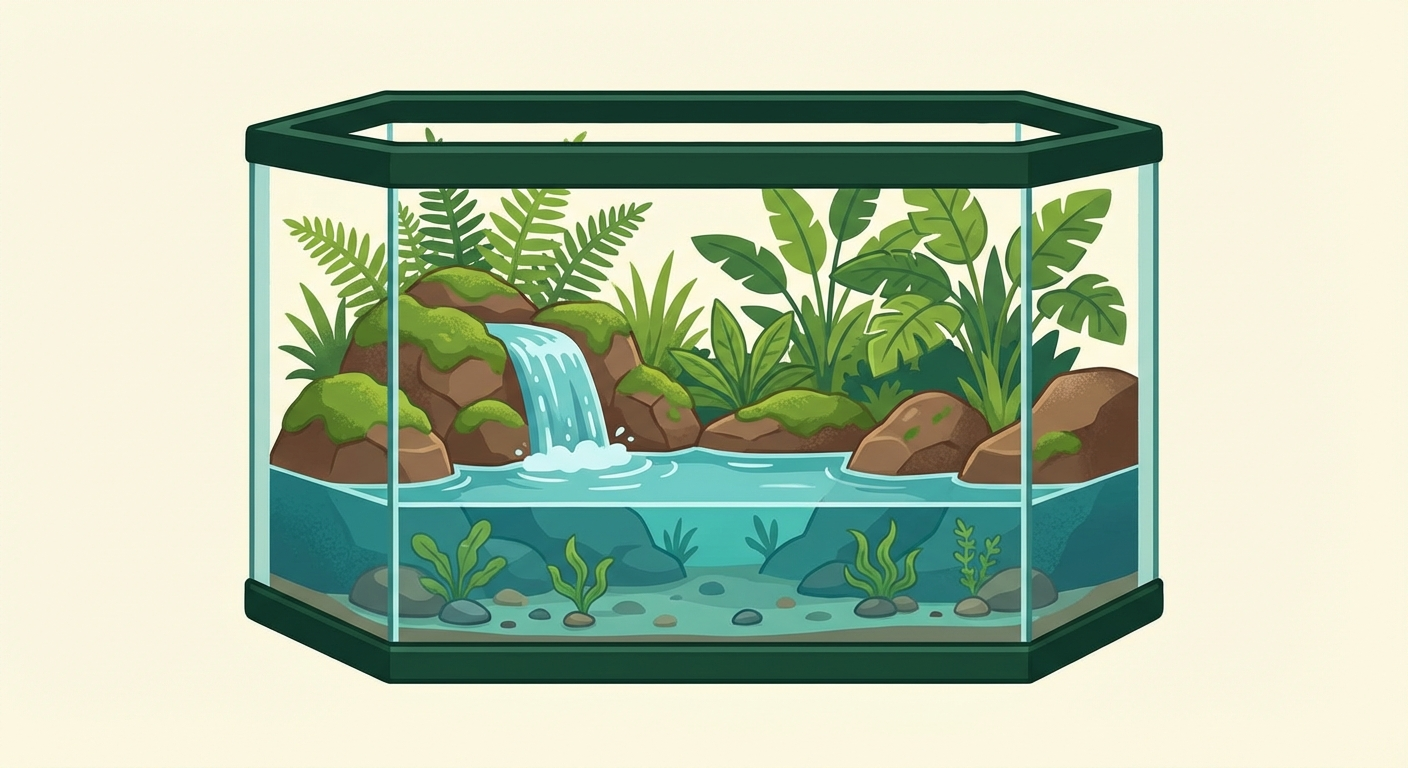
The Three Zones
Land Zone
Standard tropical terrestrial plants. High humidity, well-draining soil above the water line.
Transition Zone
The magical area where roots are wet but foliage is dry. Marginal plants and creeping vines love this.
Water Zone
Fully submerged aquatic plants attached to hardscape or rooted in substrate.
🟢 Beginner Plants
Reliable workhorses that establish quickly and help cycle your water features.

Pothos Epipremnum aureum
The MVP of paludariums. You can plant Pothos in the land section and let its vines trail into the water, where they will grow roots and suck up nitrates directly from the water column. It's a natural filter! It prevents the water from getting murky and provides hiding spots for fish. Just trim it if it gets too thick.

Java Fern Microsorum pteropus
The go-to aquatic plant for low-tech setups. Java Fern shouldn't be buried in substrate; instead, tie it or glue it to rocks and driftwood. It can grow fully submerged or partially emersed (leaves above water). Its leathery leaves are tough and most herbivorous fish won't eat it.
Anubias Anubias barteri
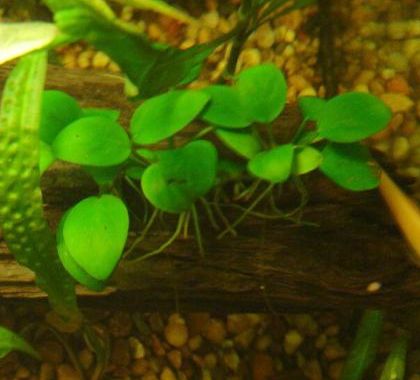
Like Java Fern, Anubias is an epiphyte that loves being attached to wood or rock. It has thick, dark green leaves that look ancient. It's incredibly hardy and tolerates low light. It's perfect for placing near the water feature outlet, where it can get splashed but still remain rooted underwater.

Creeping Fig Ficus pumila
This vine is excellent for softening the hard edges of the waterline. Plant it high on the land side and let it drape over the rocks or foam into the water. It creates a natural, mangrove-like curtain. It establishes quickly and helps hold the hardscape together with its roots.

Java Moss Taxiphyllum barbieri
The ultimate "filler" plant. You can tie Java Moss to rocks at the water's edge, or let it float. It will grow over damp rocks above the waterline too, blurring the line between land and sea. It provides excellent cover for shrimp and fish fry and helps filter the water.

Hydrocotyle Hydrocotyle tripartita
Also known as "Pennywort," this plant has distinct, clover-like leaves. It's incredibly versatile—it can grow fully submerged, float on the surface, or grow emersed out of the water. It looks amazing creeping up a waterfall or spilling over the land section.
🟡 Intermediate Plants
These add unique colors and textures but require a bit more care regarding light and nutrients.

Bucephalandra Bucephalandra spp.
Buce is the "jewel" of the aquatic plant world. It has iridescent leaves that shimmer blue, purple, or green depending on the light. Like Anubias, it grows on rocks and wood. It is slow-growing and prone to algae if conditions aren't stable, but once established, it's stunning.

Marcgravia Marcgravia spp.
In a paludarium, Marcgravia is excellent for the background above the waterfall. The high humidity from the water feature keeps it happy. It shingles against the background, creating a lush, tropical rainforest wall that looks incredible viewed through the water.

Riccia Fluitans Riccia fluitans
A floating liverwort that forms bright green mats. It's great for providing shade for fish below and a hiding place for surface-dwelling species. However, it can block light to plants below if not trimmed regularly. It can also be tied to mesh to create a "carpet" on rocks.
🔴 Advanced Plants
For the challenging parts of the build or specific aesthetic goals.

Cryptocoryne Cryptocoryne spp.
Crypts are beautiful rosette plants that come in many colors (reds, browns, greens). They are notorious for "melting" (losing all leaves) when moved to new water parameters. They usually bounce back, but this can be alarming for beginners. They prefer rooted substrate in the aquatic section.
⚠️ What NOT to Plant in a Paludarium
Don't waste your money or risk your ecosystem with these poor choices:
- Desert Succulents: They will rot instantly in the splash zone or high humidity of the land section.
- Terrestrial House Plants in Water: Plants like standard Dracaena or Dieffenbachia cannot survive with their roots fully submerged long-term; they will rot and foul the water.
- Duckweed (unless you want a headache): It spreads relentlessly across the surface, blocking all light. It is nearly impossible to remove once established.
- Invasive Grasses: Bamboo or reeds can crack glass with their expanding roots if planted in the land section without barriers.